GuidesHaircuts
Ask for it right
Most disappointing haircuts start with a vague request. A good photo and a few clear words fix nearly all of them.
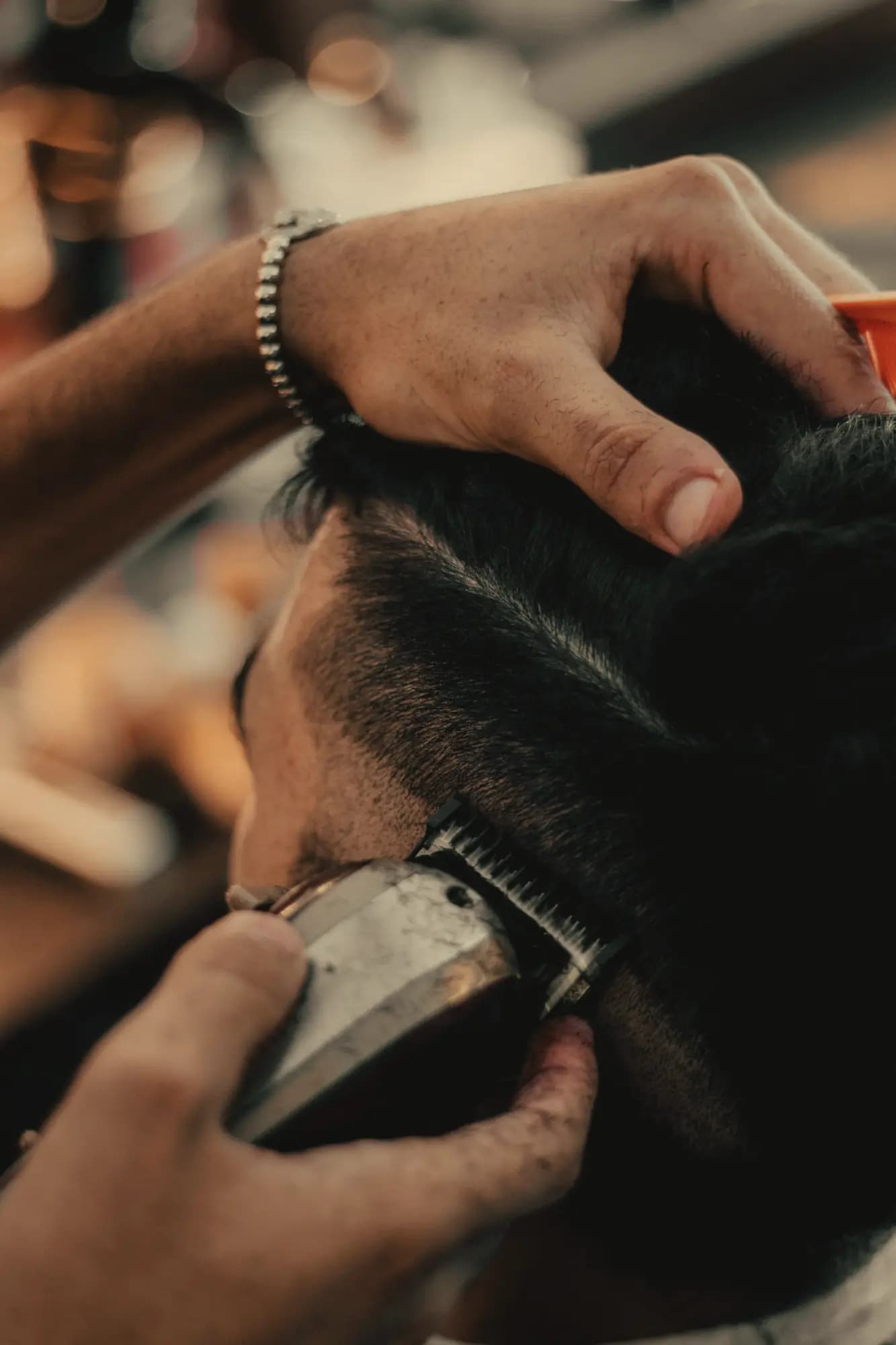
Stock photo by Tá Focando on Unsplash
In this guide
Bring a photo
A picture removes most of the guesswork. Find a photo of the cut you like on someone whose hair is similar to yours in thickness and texture, ideally from the front and the side. A cut that looks great on thick straight hair sits differently on fine or curly hair, and a barber can tell you how it would translate to yours.
Photos of cuts you dislike help as well. They show your barber what to avoid, which is often just as useful.
The words that matter
With no photo, describe the cut in parts. Start with the sides and back: a fade and where it starts, a taper, or a longer scissor cut. Then the top: how much you want off, and how you wear it, whether pushed back, parted, forward or left messy. Finish with the details, such as a natural or squared neckline and how the sideburns should sit.
Describe the cut in parts. Sides first, then the top, then the small details.
Avoid asking for a guard number unless you know it from a previous cut. Numbers vary between clippers, and a number two in one shop can be noticeably shorter in another. Showing a length between your fingers is often clearer.
Tell them how you live with it
Your barber is cutting for every morning after today, as well as the moment you leave the chair. Say how much time you spend styling, whether you use any product, what your work expects, and whether you wear a cap or a helmet.
A cut that needs careful blow drying every morning will not suit someone who towels their hair and walks out the door. Being honest about that gets you a cut that looks good on day ten, too.
Face shape and hair type
Some cuts suit some faces better. A round face often looks better with height on top and shorter sides, a long face with a little more width at the sides and less height. Thick hair may need weight taken out, while fine hair often looks fuller cut a little shorter. A cowlick or a strong crown decides where hair wants to sit, and fighting it rarely works.
This is what the free consultation is for. Sit down with a barber, show what you like, and get an honest opinion on what will work with your face shape and hair type. There is nothing to buy and no obligation to book anything else.
During the cut
Speak up early. If the sides look shorter than you expected after the first pass, say so straight away; adjusting is much easier before the rest of the cut follows. A good barber will be glad you did.
Before you leave, ask how to style it at home and look at the back in the mirror. If you love the result, take a photo of it that day. Next time you can simply show it and ask for the same again.
Questions people ask
What if I don't know what haircut I want?
Book the free consultation. A barber looks at your face shape and hair type and suggests what they would go for, and you decide from there.
Is it rude to correct my barber during the cut?
Not at all. It is far easier to adjust early than to fix things at the end, and a good barber would rather know.
Should I wash my hair before a haircut?
Clean hair without heavy product helps your barber see how it naturally sits. Wear it the way you usually do, so they can see your everyday style.
Book your chair
Pick a time online and pay at the shop, in cash or by online transfer. Walk-ins are welcome at every shop too.