GuidesHaircuts
Find your fade
Every fade is a blend from short to shorter. Where that blend starts changes the whole look, so here is how to pick yours.
Stock photo by Salah Regouane on Unsplash
In this guide
What a fade actually is
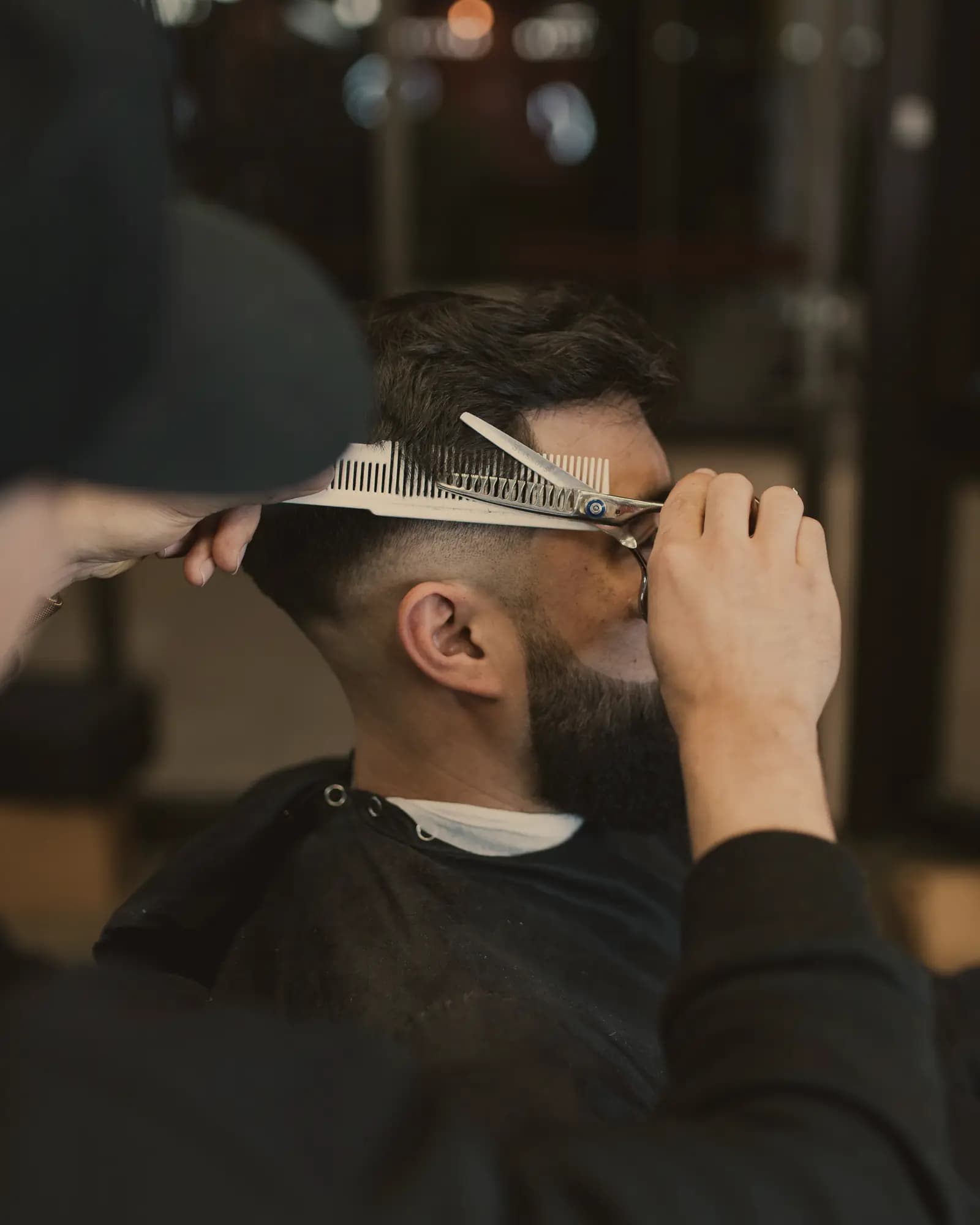
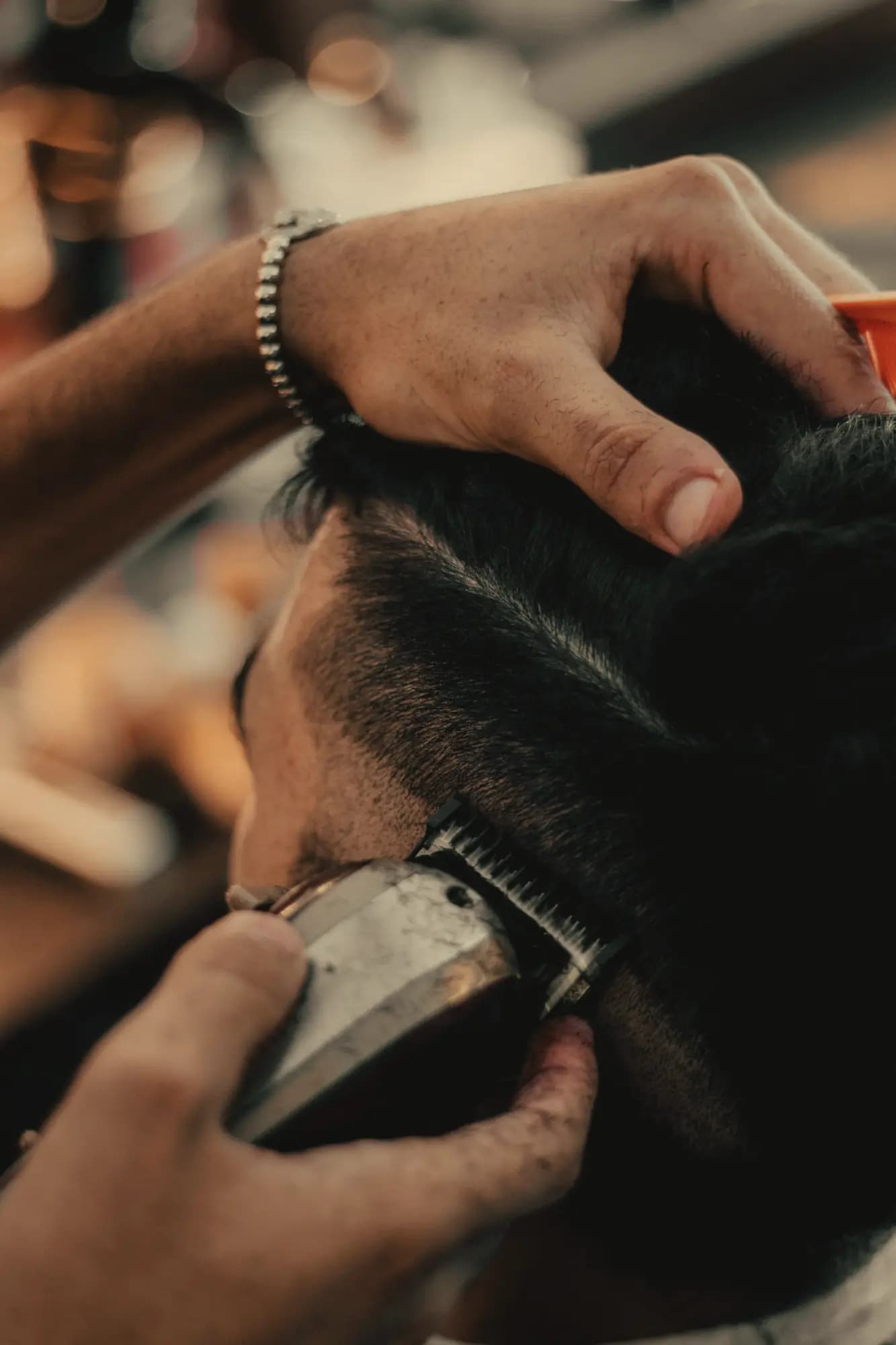
A fade is hair that gets gradually shorter as it moves down the sides and back of the head, until it almost disappears near the neck and ears. The clipper does most of the work, stepping down through guard lengths, and the skill is in hiding the joins so the change from long to short reads as one smooth gradient with no visible lines.
Where that gradient starts is what gives each fade its name. Everything above it, the top of your hair, can be left long, cropped short or styled however you like. That is why two people can both ask for a fade and walk out looking nothing alike.
One warning before the names: guard numbers vary from one clipper brand to another, so a photo and a description of where the fade starts are far more reliable than asking for a number.
The low fade
A low fade starts just above the ears and dips down toward the nape. Most of the length on the sides stays, so it reads as tidy and grown up instead of dramatic. It makes a safe first fade, it suits office life, and it grows out gently, which means it still looks fine a couple of weeks later.
It works well with longer tops, side parts and curly hair you want to keep full.
The mid fade
The mid fade begins around the temples, roughly halfway up the side of the head. It is the most requested middle ground: clearly a fade from across the room, with enough hair left above the ears to soften it.
If you are unsure, start here. It flatters most head shapes and pairs with almost any top, from a short textured crop to a quiff.
High and skin fades
A high fade starts near the top of the head, where the sides turn into the crown, and takes the sides very short. The contrast with the top is strong, so it suits people who want a sharp, deliberate look and do not mind visiting more often, because a high fade shows its growth quickly.
Where the blend starts changes the whole haircut. The top can stay exactly as you like it.
A skin fade, also called a bald fade, is any fade that goes all the way down to bare skin at the bottom, finished with a foil shaver or a razor. You can have a low, mid or high skin fade. It is the cleanest finish of all and the one that needs the most upkeep.
The taper, the quiet one
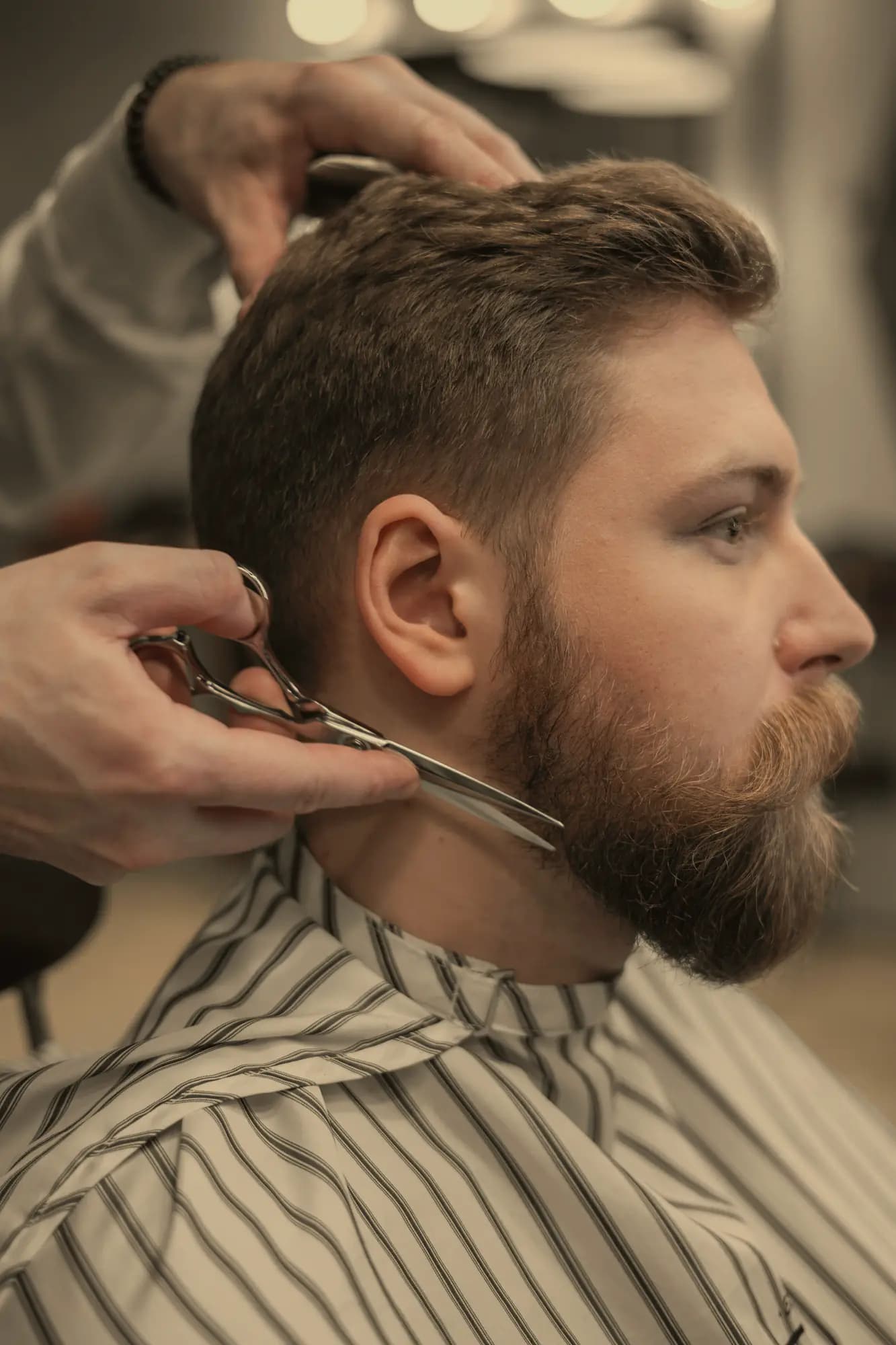
A taper shortens the hair only at the very edges: the sideburns and the neckline. The rest of the sides stay much longer than in any fade. People often mix the two words up, so if you want the back and sides to look neat without seeing any scalp, ask for a taper.
It is the most forgiving option for thick or wavy hair, and it is the classic finish for a scissor cut.
Choosing for your face and hair
A rounder face usually looks longer and slimmer with a higher fade and some height on top. A long or narrow face often looks better balanced with a low fade or a taper, which keeps width at the sides. Very curly or coarse hair shows off a skin fade beautifully, while fine, straight hair can look thin if the sides go too short, so a low or mid fade is kinder.
Your hairline and the shape of the back of your head matter too, and they are easier to judge in person. That is what the free consultation is for: sit down, show what you like, and hear honestly what will work for your face shape and hair type.
Questions people ask
How often should I get a fade touched up?
A skin or high fade looks its sharpest for a week or two, so many people come back every two to three weeks. A low fade or a taper can stretch to three or four. How fast your hair grows matters more than any rule, so book when the blend starts to look soft.
What is the difference between a fade and a taper?
A fade blends the sides and back down to very short hair or bare skin across a larger area. A taper only shortens the edges at the sideburns and neckline, so far more length stays on the sides.
Can I get a fade with curly hair?
Yes. Curly and coarse hair often fades very well, because the contrast between short sides and a full top is so clear. Tell your barber how you wear your curls so the right amount stays on top.
Book your chair
Pick a time online and pay at the shop, in cash or by online transfer. Walk-ins are welcome at every shop too.